
Acoustic Joinery: Designing Quieter, More Functional Homes

If your home ever feels louder than it should, you’re not alone.
Open-plan layouts, hard surfaces and busy households can make noise travel further than expected. Whether it’s the TV echoing through the room, kitchen noise carrying into living areas or distractions when working from home, it’s something more homeowners are noticing.
That’s where acoustic joinery comes in. It’s not about turning your home into a soundproof box. It’s about using clever design and materials to reduce noise, absorb sound and make spaces feel calmer and easier to live in.

What Is Acoustic Joinery And How Does It Work?
Acoustic joinery is the use of fitted timber features and materials to help manage sound within a room.
Instead of relying on standalone panels or temporary fixes, it integrates sound control into the structure of your space.
This might include:
Acoustic wall panelling
Slatted timber features
Built-in storage that absorbs sound
Media walls designed to reduce echo
Fitted shelving and cabinetry
The goal is simple. Reduce echo, soften noise and improve how sound behaves in a room.
Quick Answer: Can Joinery Really Reduce Noise At Home?
Yes, but it’s important to understand how.
Joinery won’t completely soundproof a room. That usually requires specialist construction work.
What it can do is:
Reduce echo and harsh sound
Absorb background noise
Improve privacy within open spaces
Make rooms feel quieter and more comfortable
For most homes, that’s exactly what’s needed.
Why Modern Homes Often Feel Noisier Than Expected
A lot of newer or renovated homes look great, but they’re not always designed with acoustics in mind.
Common causes of noise issues include:
Open-plan layouts with no separation
Hard surfaces like plaster, tiles and glass
High ceilings with little sound absorption
Minimal soft furnishings
Multi-use spaces (working, relaxing, cooking in one area)
All of these reflect sound rather than absorbing it, which is why rooms can feel echoey or loud.
How Acoustic Joinery Improves Everyday Living
This isn’t just about reducing noise for the sake of it. It’s about making your home more comfortable.
Less Echo, More Comfortable Spaces
If a room feels “loud” even when nothing major is happening, it’s usually because sound is bouncing around.
Timber features, especially when designed with texture or spacing, help break up that sound.
Better Focus When Working From Home
With more people working remotely, background noise has become a bigger issue.
Acoustic joinery can help create quieter zones within the home, making it easier to concentrate and take calls without distraction.
More Privacy In Open-Plan Homes
Open-plan living is great for space and light, but it often comes with a trade-off.
Noise travels easily between areas.
Adding fitted elements like shelving, partitions or feature walls can help reduce how far sound carries without closing off the space completely.
Where Acoustic Joinery Makes The Biggest Difference
Some areas of the home benefit more than others.
Living Rooms And Media Walls
TV sound and general noise can bounce around living rooms, especially if there are lots of hard surfaces.
A well-designed media wall can help absorb sound while keeping everything neat and integrated.
Home Offices And Study Areas
Even a small amount of noise can be distracting when you’re working.
Acoustic panelling or fitted joinery can help create a more focused environment without needing a separate room.
Kitchens And Open-Plan Spaces
Kitchens are naturally noisy.
You’ve got appliances, hard surfaces and movement all in one space.
When this connects directly to a living area, sound travels quickly.
Using fitted cabinetry and integrated design can help soften that effect, especially when planned as part of a wider layout.
Hallways And Connecting Spaces
These are often overlooked, but they can amplify sound as it moves through the house.
Adding panelling or fitted features can help reduce this.
Types Of Acoustic Joinery Features To Consider
There isn’t just one solution. It depends on your space and how you use it.
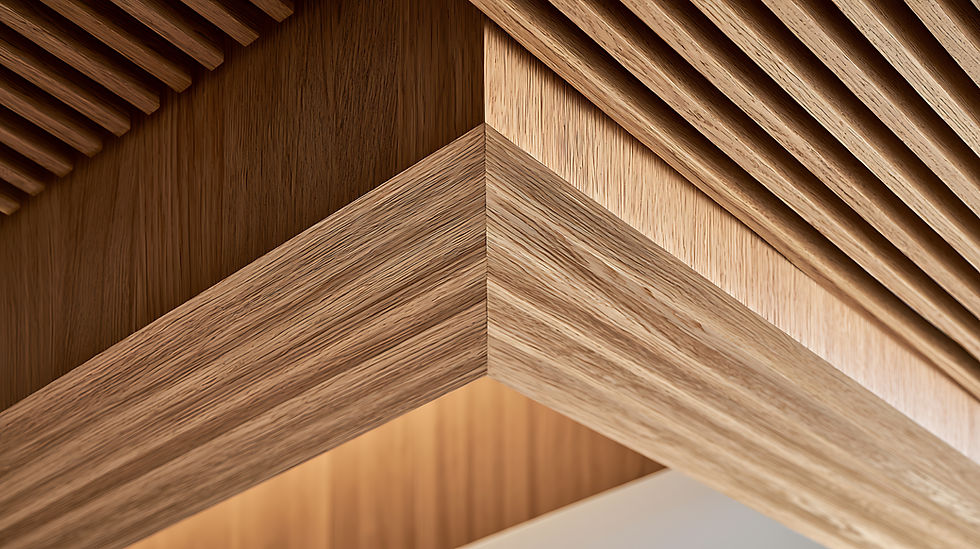
Slatted Timber Panels
These are one of the most popular options.
They:
Break up sound waves
Add texture to the room
Work well in both modern and traditional interiors
Acoustic Wall Panelling
Often backed with sound-absorbing material, these panels are designed specifically to reduce echo.
They can be integrated into feature walls or used more subtly.
Built-In Storage And Shelving
Storage might not seem like an acoustic solution, but it plays a big role.
Filled shelves and enclosed units help absorb sound naturally.
Room Dividers And Zoning Features
Instead of building walls, joinery can be used to define areas and reduce noise flow.
This works particularly well in open-plan homes.
What Acoustic Joinery Can And Can’t Do
It’s important to be realistic.
Acoustic joinery can:
Reduce echo
Improve sound quality in a room
Make spaces feel quieter
Help manage noise between areas
It cannot:
Fully soundproof a room
Block all external noise
Replace specialist soundproofing systems
For most homeowners, though, improving how sound behaves inside the home is enough to make a noticeable difference.
Common Mistakes To Avoid
Expecting Complete Silence
This isn’t about eliminating sound completely. It’s about improving comfort.
Adding Panels Without A Plan
Random additions rarely work well.
The best results come from designing the space as a whole.
Ignoring Layout And Materials
Acoustics are influenced by everything in the room, not just one feature.
Is Acoustic Joinery Worth It?
If noise is affecting how you use your home, then yes, it’s worth considering.
Even small changes can make a noticeable difference.
It’s particularly useful if:
You work from home
Your space feels echoey
You have an open-plan layout
You want a more comfortable living environment
Frequently Asked Questions
Does Acoustic Joinery Soundproof A Room?
No. It improves sound within a space but doesn’t fully block noise.
Can It Be Added To Existing Rooms?
Yes. Many acoustic features can be retrofitted without major structural work.
Is It Only For Modern Homes?
No. It can be designed to suit both modern and traditional interiors.
Does It Change The Look Of A Room?
Yes, but usually in a positive way. It often adds texture and depth rather than taking anything away.
Creating A Quieter, More Comfortable Home
Noise is something many people put up with, but it doesn’t have to be that way.
With the right approach, you can improve how your home sounds as well as how it looks.
If you’re already thinking about upgrading your space, it makes sense to consider acoustics at the same time as layout and design.
To explore how fitted joinery and tailored solutions could improve your home, you can browse the full range of services, or if you’re ready to discuss ideas, you can get in touch directly.


Comments